
Money moves through our lives constantly. We earn it, spend it, transfer it, and sometimes help others with it. Most of the time, we never question where money comes from or where it ends up. Still, behind everyday transactions, there are strict laws designed to keep financial systems clean and lawful. This is exactly why many associates search for Walmart anti money laundering CBL answers—to clearly understand their role and complete training with confidence.
Anti-money laundering, commonly called AML, is not just a legal requirement. It is a shared responsibility, especially for large organizations like Walmart that handle high volumes of financial activity. This guide breaks down the topic in simple language, using real-life situations instead of technical jargon, so the training feels practical rather than overwhelming.
What Is Money Laundering in Simple Terms?
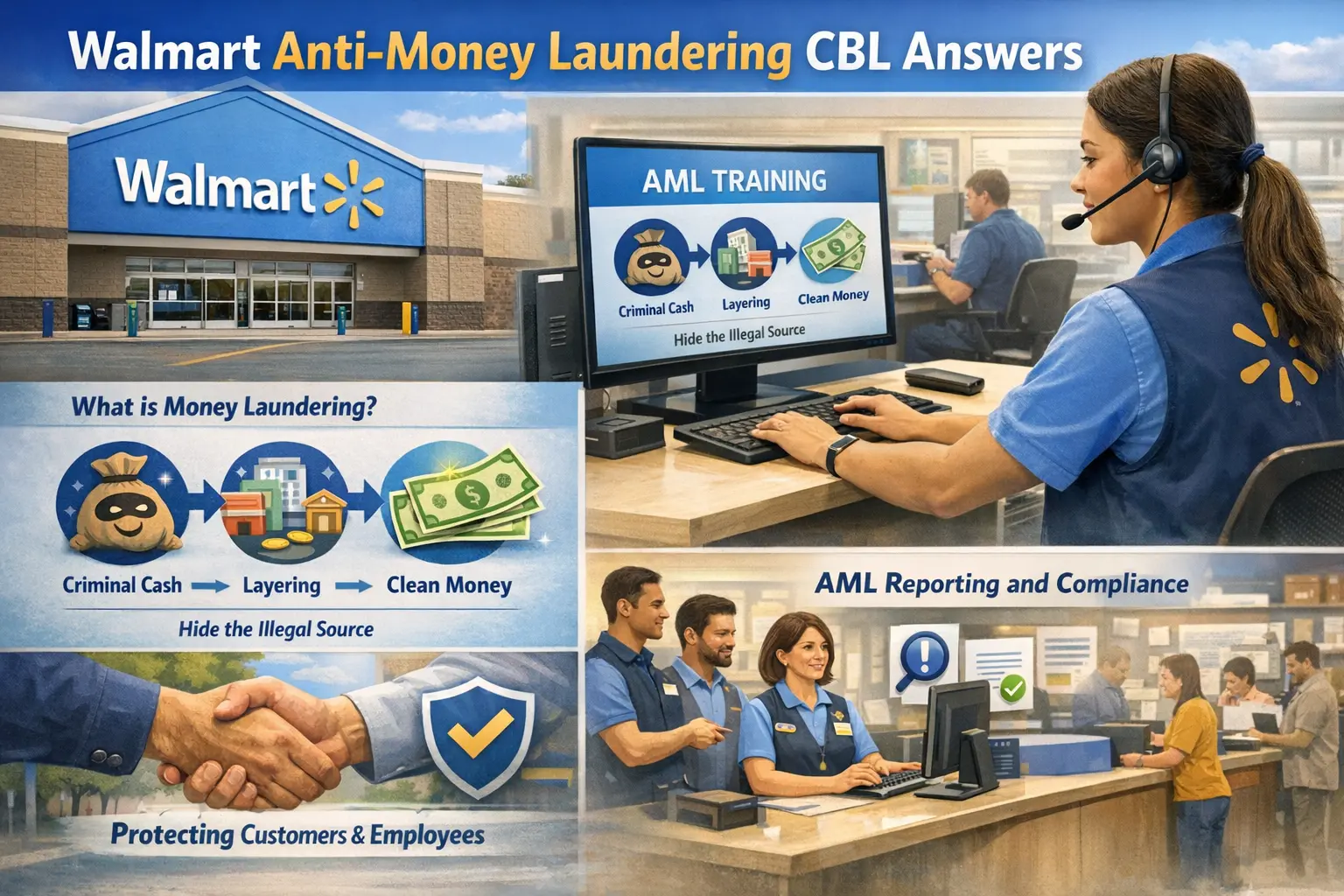
Money laundering is the act of disguising illegally earned money so it looks like it came from a legitimate source.
Think of it this way: if something valuable gets dirty, you clean it so it appears new again. Criminals attempt to do the same with money earned through illegal means—they move it around until it looks normal and harmless.
This process usually involves:
- Money generated through unlawful activity
- Multiple transfers or transactions
- Making the funds appear like regular income
Because Walmart offers various financial services, it can be targeted for this kind of misuse. That is why Walmart anti money laundering CBL answers focus heavily on awareness and correct responses.
Why AML Is Important at Walmart
Walmart serves millions of customers every day, not only through retail sales but also through services like:
- Money transfers
- Check cashing
- Money orders
- Bill payment services
Due to this, Walmart must follow strict federal and state regulations. Ignoring these laws can lead to severe penalties for the company. AML training exists to prevent that risk and to guide employees on how to act in unusual situations. This purpose is central to Walmart anti money laundering CBL answers.
Understanding What “CBL” Means
CBL stands for Computer-Based Learning. These are online training modules employees complete during onboarding and throughout their employment.
AML-focused CBLs aim to:
- Explain legal responsibilities
- Present realistic scenarios
- Show correct reporting procedures
Many associates look up Walmart anti money laundering CBL answers because the scenarios can seem tricky at first. Once the concepts are understood, the questions become far more manageable.
The Core Objective of AML Training
The main goal of AML training is simple: identify unusual behavior and report it properly.
Employees are not expected to:
- Investigate customers
- Accuse anyone of illegal activity
- Decide whether money is criminal
Instead, associates are trained to notice patterns and follow reporting rules. This idea appears repeatedly in Walmart anti money laundering CBL answers, even if it is not always stated directly.
What Counts as Suspicious Activity?
Suspicious behavior does not automatically mean illegal behavior. This difference is very important.
Sometimes customers act in ways that fall outside normal patterns. These actions raise red flags, which are simply signs that something may need review.
Examples include:
- Breaking one large transaction into smaller amounts
- Refusing to show required identification
- Asking how to avoid limits or reporting rules
On their own, these actions may be harmless. When they happen repeatedly, they become meaningful. Many Walmart anti money laundering CBL answers focus on recognizing these patterns.
Structuring: A Key AML Concept
One topic that frequently appears in AML training is structuring.
Structuring happens when someone intentionally splits transactions to stay under reporting limits. For instance, instead of sending $10,500 at once, a person may send $9,800 today and another similar amount later.
Even though each transaction looks normal individually, the pattern raises concern. That is why structuring is emphasized so strongly in Walmart anti money laundering CBL answers.
Common Red Flags Covered in Training
AML training highlights warning signs, not proof of wrongdoing. These red flags help employees know when to report.
Common examples include:
- Customers acting anxious or rushed
- Inconsistent explanations
- Multiple people performing similar transactions
- Questions focused on limits or reporting rules
Over time, these signs become easier to recognize. This awareness is exactly what Walmart anti money laundering CBL answers are designed to assess.
Why Reporting Matters So Much
Many employees worry about reporting something incorrectly. AML training makes it clear that certainty is not required.
If behavior feels unusual, it should be reported through proper channels. Specialized teams then review the information and determine next steps.
This principle is central to Walmart anti money laundering CBL answers: when unsure, reporting is the correct action.
Actions Employees Must Avoid
Knowing what not to do is just as important as knowing what to do.
Employees should never:
- Inform customers they are being reported
- Confront or accuse anyone
- Conduct personal investigations
These rules protect everyone involved, which is why they appear frequently in Walmart anti money laundering CBL answers.
A Real-World Example
Imagine a customer visits the money center several times in one week. Each transaction is just below the reporting threshold. The customer seems uneasy and avoids questions.
The correct approach would be:
- Complete the transaction normally
- Follow standard procedures
- Report the pattern through the proper system
There is no confrontation or explanation to the customer. Scenarios like this appear often in Walmart anti money laundering CBL answers because they reflect real workplace situations.
Why AML Training Is Repeated
Financial crime methods evolve, which means AML training must stay current.
Walmart regularly updates:
- Policies
- Training materials
- Reporting procedures
This is why employees complete AML CBLs more than once. With time, Walmart anti money laundering CBL answers become familiar instead of confusing.
Common Misconceptions About AML Training
Some people think AML training is just a formality or only applies to management. Both beliefs are incorrect.
AML training:
- Protects the company
- Protects employees
- Ensures legal compliance
These ideas often appear indirectly in Walmart anti money laundering CBL answers.
Tips for Answering AML CBL Questions
When completing an AML CBL, take your time. Read each scenario carefully and think through the situation.
Ask yourself:
- Is there a pattern?
- Should this be reported?
- Does the option avoid confrontation?
Most correct answers involve following reporting procedures, which aligns with official Walmart anti money laundering CBL answers.
Why Employees Search for CBL Answers
CBLs can feel long, detailed, and stressful—especially when timed. That is why many associates search for Walmart anti money laundering CBL answers online.
However, true understanding removes the need to memorize answers. Once the concepts click, the correct choices become obvious.
How AML Rules Protect Employees
AML policies do more than prevent crime. They also safeguard employees by:
- Providing clear guidelines
- Reducing personal responsibility
- Preventing legal risk
Following Walmart anti money laundering CBL answers is about clarity and protection, not just compliance.
Core Themes That Appear Throughout AML Training
Several ideas repeat across all AML modules:
- Patterns are more important than single actions
- Reporting is required
- Employees should not judge customers
- Procedures must always be followed
Recognizing these themes makes Walmart anti money laundering CBL answers easier to understand in any scenario.
The Larger Purpose Behind AML
Customers trust Walmart with their money. That trust depends on strong systems and well-trained associates.
AML training supports this trust quietly and consistently. Most customers never notice it, but it plays a crucial role—one reason Walmart anti money laundering CBL answers matter so much.
Final Thoughts: Understanding Over Memorization
AML training works best when employees understand why the rules exist.
Once you understand:
- The purpose of red flags
- The importance of reporting
- The risks of ignoring patterns
The Walmart anti money laundering CBL answers begin to make sense naturally.
Also Read About
Illinois Public Act 101-0038 Task Force: Explained Simply and Clearly
One Key Takeaway to Remember
You are not responsible for proving illegal activity.
You are responsible for noticing unusual patterns and reporting them.
This single idea sits at the heart of all Walmart anti money laundering CBL answers—and effective AML programs everywhere.
