
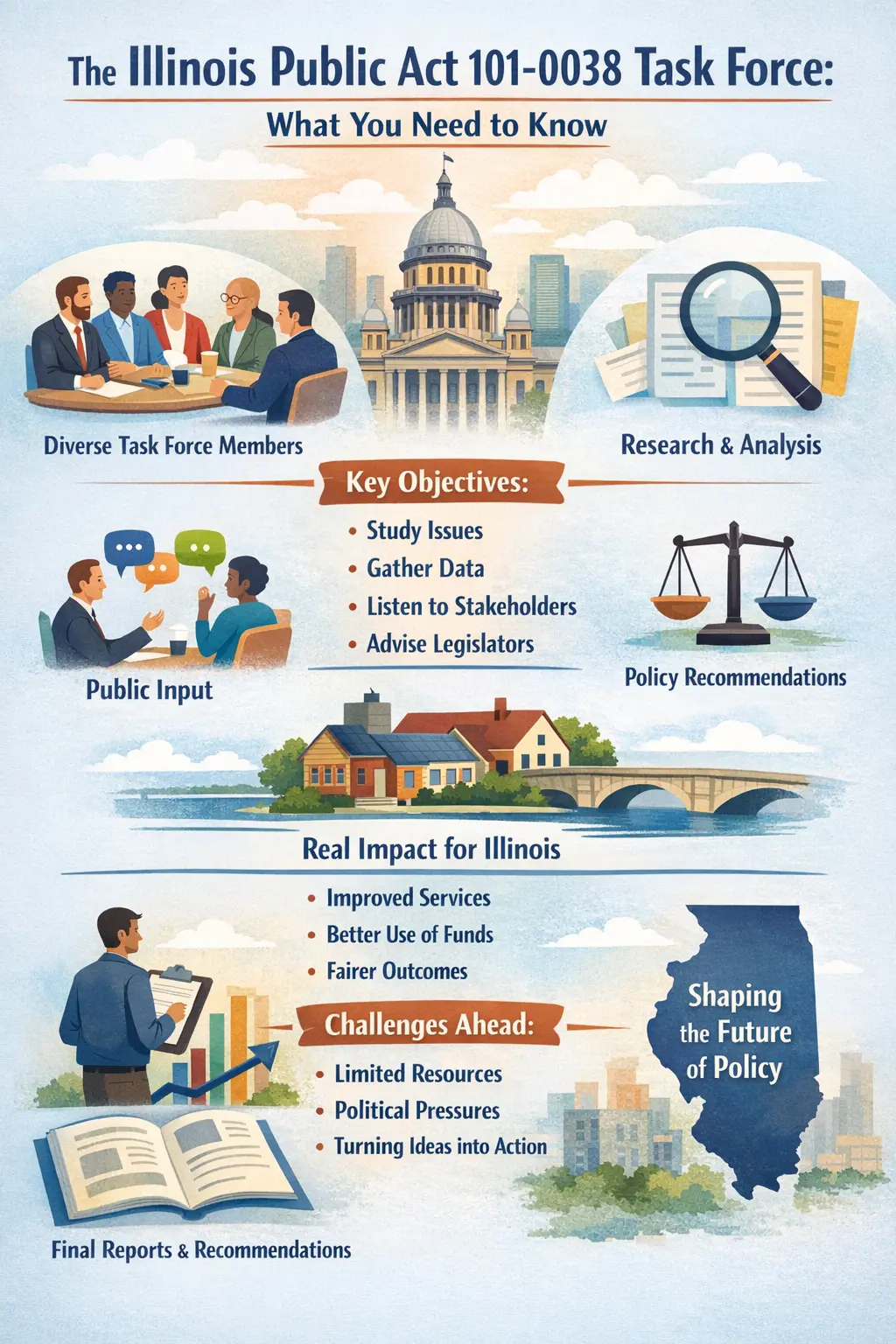
When a law is approved, the process doesn’t end with a signature. In many cases, the most important work begins afterward. This is where task forces play a critical role. One such example is the Illinois Public Act 101-0038 Task Force, a body that continues to be referenced in policy conversations and official discussions across the state.
If you’ve come across this term in reports or news stories and felt unsure about what it actually means, you’re not alone. Legal titles often sound complicated, but the reality is much simpler. This task force is directly connected to real-world issues that affect people and communities throughout Illinois.
Let’s walk through it in clear, everyday language.
Understanding Illinois Public Act 101-0038
At its foundation, Illinois Public Act 101-0038 is a state law created to address a public concern in a thoughtful and organized way. Instead of assigning responsibility to a single department, the law established a task force to closely examine the issue, analyze data, and propose informed solutions.
This group is now widely known as the Illinois Public Act 101-0038 Task Force.
You can think of it as a collaborative problem-solving team. When a challenge is too complex for one agency to manage alone, the state brings together specialists, officials, and community representatives to work collectively. That collaboration is the task force’s purpose.
Why the State Uses Task Forces
A common question is: why not simply pass a law and enforce it immediately?
Some issues require more care. They involve long-term effects, multiple stakeholders, and practical challenges that aren’t obvious on paper. That’s why task forces exist.
They allow time for:
- Careful research
- Open discussion
- Input from affected groups
- Strategic, long-range planning
The Illinois Public Act 101-0038 Task Force helps lawmakers understand how the law works in practice and what adjustments may be needed over time. In many ways, it serves as a connection point between legislation and real-life outcomes.
Core Goals of the Task Force
The primary mission of the Illinois Public Act 101-0038 Task Force is to translate legal intent into effective action.
Its responsibilities often include:
- Examining how the law is being applied
- Identifying weaknesses or obstacles
- Gathering perspectives from stakeholders
- Providing practical recommendations to state leaders
Rather than relying on assumptions, the task force bases its guidance on evidence, experience, and feedback.
Who Serves on the Task Force
One of the task force’s strongest features is the variety of voices involved.
Membership may include:
- Government officials
- Policy and subject-matter experts
- Representatives from related agencies
- Advocates from the community
- Professionals with field experience
This range of perspectives helps ensure that decisions are balanced and grounded in reality. When multiple viewpoints are considered, the resulting recommendations tend to be more effective and fair.
How the Task Force Operates
The Illinois Public Act 101-0038 Task Force typically follows a structured and transparent process.
Its work often includes:
- Collecting data and reviewing existing reports
- Holding meetings to discuss findings
- Seeking public or community input when appropriate
- Evaluating possible solutions
- Submitting formal recommendations to lawmakers or agencies
This approach helps prevent rushed decisions and keeps the focus on practical solutions.
Why This Matters to Everyday Residents
It’s easy to assume that task forces only affect policymakers, but their influence reaches much further.
The work of the Illinois Public Act 101-0038 Task Force can shape:
- How public services operate
- Where funding is directed
- How regulations are enforced
- How future laws are written
When inefficiencies are identified, resources can be used more wisely. When unfair outcomes are discovered, corrective steps can be taken. Ultimately, this process helps policies work better for the people they are meant to serve.
Real-Life Effects of the Task Force’s Work
The impact of a successful task force is often subtle but meaningful.
Rather than dramatic headlines, improvements show up as:
- Clearer procedures
- Better coordination among agencies
- Increased accountability
- Smarter long-term planning
Over time, these steady improvements can make a noticeable difference across the state.
Challenges the Task Force Encounters
Like any public body, the Illinois Public Act 101-0038 Task Force faces obstacles.
These may include:
- Limited resources or tight timelines
- Differences of opinion among members
- Political pressure
- Difficulty turning ideas into funded action
Recognizing these challenges helps keep expectations realistic and encourages transparency.
Accountability and Transparency
Public trust depends on openness.
The task force is generally required to:
- Record its findings
- Produce written reports
- Follow deadlines set by law
These measures allow legislators, journalists, and citizens to review its work and hold it accountable.
Why Lawmakers Depend on Task Forces
No single individual has expertise in every area. Task forces allow policymakers to gather informed advice before making lasting decisions.
They help reduce unintended consequences and improve the quality of policy choices. Much like testing a plan before full implementation, this process allows for refinement and improvement.
The Role of Public and Community Input
Community participation is a valuable part of the Illinois Public Act 101-0038 Task Force process.
People directly affected by a policy often recognize issues early, such as:
- Access barriers
- Confusing requirements
- Unequal impacts
Including these voices leads to stronger recommendations and builds public confidence.
Long-Term Significance of Public Act 101-0038
Some laws are temporary. Others continue to shape policy long after they are passed.
Illinois Public Act 101-0038 belongs to the latter group. The task force helps ensure the law remains effective as conditions evolve.
Its influence may extend to:
- New legislation
- Updated regulations
- Revised standards and guidelines
That ongoing relevance is why the task force’s work remains important.
Clearing Up Common Misconceptions
“It’s all discussion, no results.”
While the task force doesn’t enforce laws, its recommendations often lead to meaningful policy changes.
“It only serves government interests.”
The goal is to improve outcomes for the public, not expand bureaucracy.
“It’s too complex to understand.”
At its core, the task force is about problem-solving, not legal jargon.
Why This Topic Is Worth Your Attention
Processes like the Illinois Public Act 101-0038 Task Force play a quiet but essential role in how laws function day to day. They encourage thoughtful decision-making and help avoid rushed or ineffective policies.
Understanding these efforts helps citizens stay informed and engaged.
What the Future Holds
The long-term impact of the Illinois Public Act 101-0038 Task Force depends on:
- Support from leadership
- Availability of funding
- Continued review and follow-up
When its recommendations are taken seriously, the benefits can extend across Illinois for many years.
Also Read About
Startup Booted Fundraising Strategy: A Practical Guide for Founders
Final Takeaway
The Illinois Public Act 101-0038 Task Force may not attract widespread attention, but its role is significant. It represents a careful approach to governing—one that values research, cooperation, and public input.
By learning how this task force operates, we gain insight into how laws move from written text to real-world results. Progress doesn’t always come from bold announcements. Often, it comes from steady, thoughtful work happening quietly behind the scenes.
