
Securing funding is one of the toughest hurdles for any startup. You may have a solid idea, a capable team, and even a working product—but without the right financial backing, growth can stall quickly. This is where a startup booted fundraising strategy becomes essential.
Rather than chasing money blindly, this approach focuses on planning, positioning, and executing fundraising efforts in a way that aligns with your long-term vision. In this guide, we’ll walk through the fundamentals, outline proven steps, and share practical insights to help founders raise capital with confidence.
What Startup Fundraising Really Means
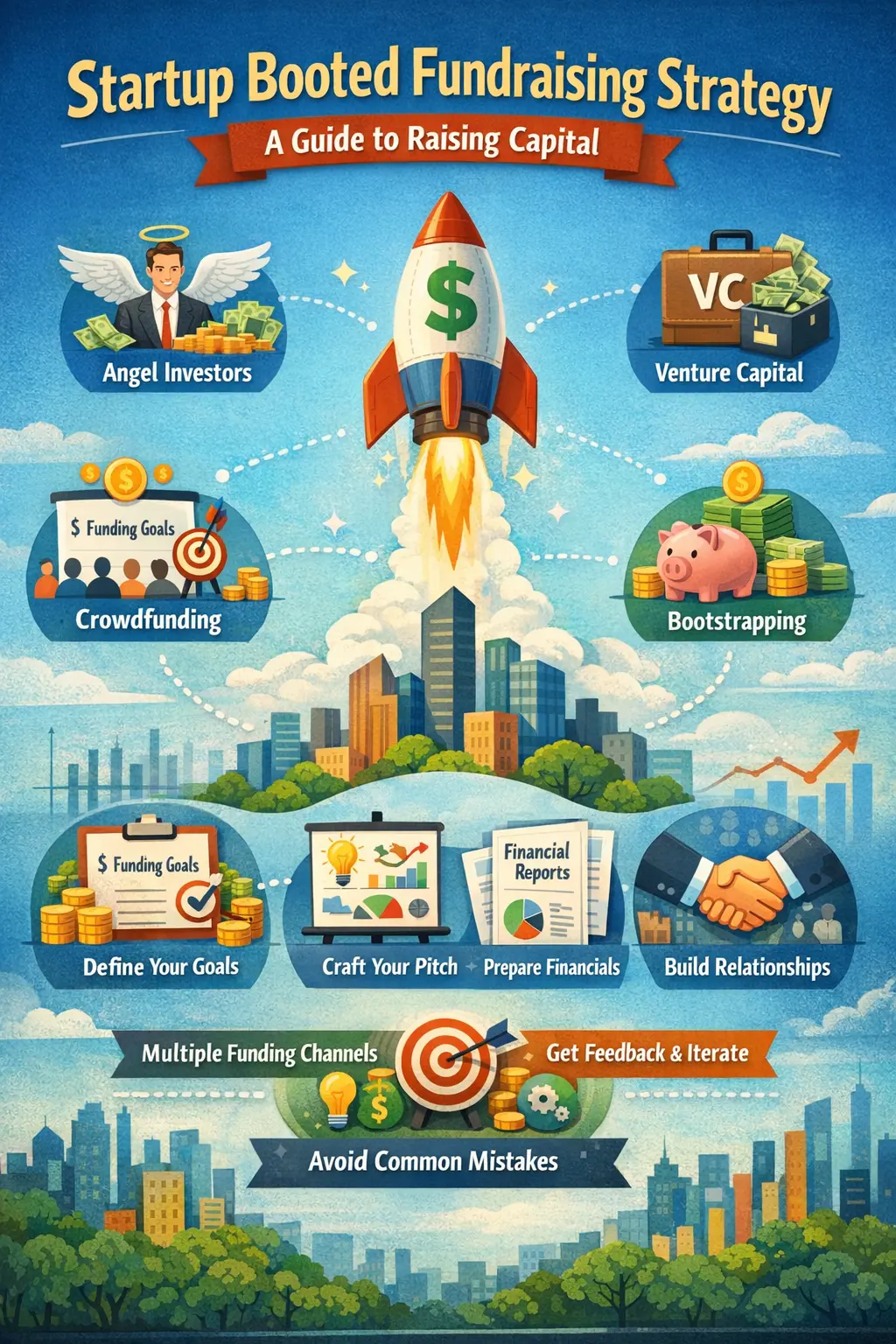
Before discussing strategy, it’s important to understand what fundraising involves. In simple terms, startup fundraising is the process of bringing in external or internal capital to support business growth. Founders typically explore several funding routes, such as:
- Angel investors – Individuals who invest their personal wealth in early-stage companies
- Venture capital firms – Professional investment firms backing high-growth startups
- Crowdfunding – Raising smaller amounts from a large number of supporters online
- Bootstrapping – Growing the business using personal savings or company revenue
Each option comes with its own advantages and trade-offs. A well-designed startup booted fundraising strategy helps founders choose the mix that best fits their stage, goals, and risk tolerance.
Why Having a Fundraising Plan Is Critical
Some founders believe that a great idea alone will attract investors. In reality, most investors back startups that demonstrate planning and discipline. A clear fundraising strategy helps by:
- Defining purpose – Investors want to know exactly how their money will be used
- Saving effort – Focusing on suitable investors avoids wasted conversations
- Improving credibility – Preparation signals professionalism and seriousness
- Lowering dependency risk – Multiple funding options reduce reliance on one source
Think of fundraising like navigating unfamiliar territory. Without direction, progress is slow and uncertain. A strategy provides clarity and momentum.
How to Create a Startup Booted Fundraising Strategy
Building an effective fundraising strategy requires thoughtful preparation and execution. Below are the key steps founders should follow.
1. Clearly Outline Your Capital Requirements
Start with specifics. Ask yourself:
- How much funding is necessary right now?
- What milestones will this capital help achieve?
- How long will the funds support operations?
Instead of vague statements, provide detailed allocations. For example, explain how much will go toward product development, marketing, hiring, or operations. Precision builds investor confidence.
2. Find Investors Who Match Your Startup
Not every investor is right for every startup. Research plays a huge role here:
- Look for investors experienced in your industry
- Study the stages they usually invest in
- Review their past investments and outcomes
Targeting the right investors increases your chances and saves valuable time.
3. Develop a Strong and Clear Pitch
Your pitch should explain your startup story in a way that is easy to understand and hard to forget. Focus on:
- The problem you’re solving
- Your solution and why it stands out
- Market size and customer demand
- Current traction or early results
- The strength of your team
- Financial expectations and funding needs
A compelling narrative matters. Investors back founders they believe in, so let your passion and commitment come through naturally.
4. Get Your Financials in Order
Investors expect transparency and clarity. Be prepared with:
- Revenue and expense statements
- Cash flow forecasts
- Balance sheets
- Ownership and equity breakdowns
A startup booted fundraising strategy always includes a realistic financial roadmap that shows how capital will be managed and how returns may be generated.
5. Start Building Investor Relationships Early
Fundraising rarely works overnight. Begin connecting with potential investors long before you actually need funding by:
- Attending startup and industry events
- Participating in pitch sessions or demo days
- Engaging in founder communities and online networks
- Learning from experienced entrepreneurs
Trust grows over time, and familiar founders often have a higher chance of receiving investment.
6. Use More Than One Funding Route
Relying on a single funding source can slow progress. Consider combining different options, such as:
- Equity-based investments
- Loans or convertible instruments
- Grants, awards, or startup challenges
- Revenue-linked financing models
This flexible approach keeps your startup moving even if one option falls through.
7. Improve Your Strategy Through Feedback
Rejections are part of the process. What matters is how you respond. After each pitch, evaluate:
- Was the value proposition clear?
- Did investors understand the market opportunity?
- Were financial assumptions realistic?
Refining your approach based on feedback significantly improves future outcomes.
Mistakes Founders Should Avoid
Even with a solid plan, missteps can happen. Common fundraising mistakes include:
- Setting an unrealistic company valuation
- Pitching to investors who don’t match your stage
- Lacking proper documentation
- Ignoring relationship-building opportunities
Avoiding these errors can save months of frustration.
A Simple Real-World Example
Consider a founder named Sarah who built a SaaS platform with strong potential but struggled to raise funds. She realized her approach lacked structure and focus.
After developing a clear startup booted fundraising strategy, she:
- Defined precise funding goals
- Focused on SaaS-focused investors
- Improved her pitch around traction and team strength
- Actively networked through professional platforms
Within half a year, she successfully closed a seed round of $750,000—proving that preparation and persistence pay off.
Practical Tips for Better Fundraising Results
To strengthen your fundraising efforts:
- Be genuine and relatable in your story
- Highlight early achievements, even small ones
- Communicate openly and honestly
- Follow up professionally without pressure
- Lean on advisors and mentors for guidance
Also Read About
Final Thoughts
A startup booted fundraising strategy is not just about raising money—it’s about building trust, communicating value, and planning for sustainable growth. Founders who approach fundraising with clarity and discipline are far more likely to succeed.
With the right preparation, strong relationships, and a thoughtful strategy, your startup can move confidently from idea to execution—and toward long-term success.
